

Beyond spaces
Using data to build human-centered sustainable workplaces
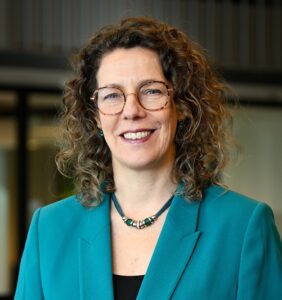
Rianne Appel-Meulenbroek
With almost 2,100 members outside the United States and many more professionals who take IREM® education courses, IREM’s global reach has been steadily increasing. Issues like hybrid work and returning to the office affect property managers all over the world, and understanding the local context of a given country is just as important as understanding the individual needs of the company.
While workplace practices differ across regions and industries, organizations everywhere are grappling with similar questions: How can offices support collaboration, well-being, and productivity in an era of flexible work? How can managers make informed decisions about space when employee workplace preferences have become increasingly diverse? These challenges require a deeper understanding of how people actually use and experience workplaces, rather than relying on traditional assumptions about office use.
IREM recently had the opportunity to connect with Rianne Appel-Meulenbroek, a professor at Eindhoven University of Technology in the Netherlands and leading expert on rethinking the modern workplace. As property managers around the world are tackling the challenges brought on by the increase of remote work and hybrid workspaces, the question of how to make the office more appealing is an important one. For managers of office assets, and even managers of property management workspaces, creating an inviting in-person work environment is essential to attracting and retaining tenants, supporting occupancy goals, and maximizing the value of office amenities and services.
Below are edited highlights of Professor Appel-Meulenbroek’s inaugural speech at Eindhoven University of Technology. In it, she outlines some innovative ways for property managers to think about this new era of office space, regardless of where in the world they practice their profession.
The value of an inviting workplace
The offices where we work are fundamental to our human experience. Spending many of our days in the office, the space we’re surrounded by shapes our lives. We often think of ecosystems in terms of the natural world, but workplaces are ecosystems as well, shaped by the interactions, experiences, and environments that influence productivity and engagement.
As in nature, the kinds of workplaces we see today are widely diverse, with different people needing different spaces. Work environments comprise a multitude of synergies between people, technologies, management, and space. So to create healthy workplaces that promote effective work and financial viability, we need to understand the spaces we are surrounded by as we work.
Office space is typically defined by meeting core business processes to add maximum value. But that definition leaves out the human element. Work performance is important, of course, but beyond that, the actual workplace shapes behaviors in everyday lives.
Studying the interaction between humans and their workspace is a transdisciplinary field that combines many different fields: ergonomics, real estate management, spatial design, digital tech, environmental psychology, human resources management, organizational behavior, and more. Understanding this complex picture requires new methods, ways of thinking, and collaborations to implement more effective management strategies and use of space. The main thing to remember is the human element.
Hybrid workforce
In recent years, the shift to hybrid work has shaped discussions about the workplace. With Industry 5.0 right around the corner, it’s imperative that we create human-centered workplaces. Industry 5.0, as defined by the European Union, “provides a vision of industry that aims beyond efficiency and productivity as the sole goals, and reinforces the role and the contribution of industry to society.” This vision of the future workplace puts emphasis on sustainable human-centric industry; that is, balancing the needs of the organization with the needs of the people working there, while maintaining environmental considerations.
Hybrid work is here to stay, and office strategies must evolve accordingly. As organizations look for ways to encourage employees to return to the workplace, one challenge is managing the unpredictable occupancy patterns that come with flexible schedules. In the Netherlands, for example, office attendance often follows a “camel” pattern, dipping on Wednesdays when many children finish school early and parents opt to work from home.
That’s just one example, as people can work in a variety of places. That diversity in workplace options makes it difficult to see how to provide a meaningful workplace experience. But it also presents an opportunity to move beyond traditional occupancy assumptions and manage workplaces based on actual usage patterns.
Looking to the future
What we can say for certain is that office management operations need an update. Companies collect a ton of data, but management decisions are broadly aimed at the average employee. There is, however, no such thing as an average employee.
Moreover, the workplace surrounding employees is made up of several entities. Workplace management, human resource management, and other supportive services like IT are all trying to provide for the average worker. But it’s fragmented. Each of these pieces are siloed off with their own metrics, utilizing their own methods and expertise to make decisions that may not be readily understood by everyone at the organization.
All these disparate departments need to work in tandem, as they are all pieces of the total workplace ecosystem. The trouble with implementing meaningful change is that many tools and departments use sector-specific language and metrics to determine success. A human-centric workplace needs more shared data definitions. The default mode of the workplace should be collaboration.
Conclusion
With the recent advances in technology across sectors, we should look forward to emerging technologies not replacing humans but supporting our human judgment with easy-to-understand data. By promoting interdisciplinary data-driven management in the workplace, we promote transparent decision-making to reveal changes that suit the needs of the organization.
Property managers must combine different disciplines in their work, taking into consideration the needs and data ranging from accounting to human resource management to customer service and compliance with applicable local laws. By doing so, property managers get a more accurate view of their office space and can make more informed recommendations to clients and owners.
It’s difficult to untangle the different pieces of the workplace, but the complexity we face is not a barrier—it’s an opportunity. Working on this future workplace with people from a variety of backgrounds and expertise will help make a better workplace for all.
However, in 2022, the United Arab Emirates government officially implemented a Monday-through-Friday schedule for government and public schools, with Friday being a flexible half day to accommodate both prayer and international business needs. Other countries like Japan have seen real estate companies in particular allowing Wednesdays off in exchange for working either Saturday or Sunday, to promote better work-life balance.
Issue: Issue 4 2026 Volume 91 Number 4

Similar Posts

Global practices
Egypt’s growth blueprint
As foreign capital fuels growth, property management evolves alongside this...