Egypt’s growth blueprint
As foreign capital fuels growth, property management evolves alongside this middle eastern development
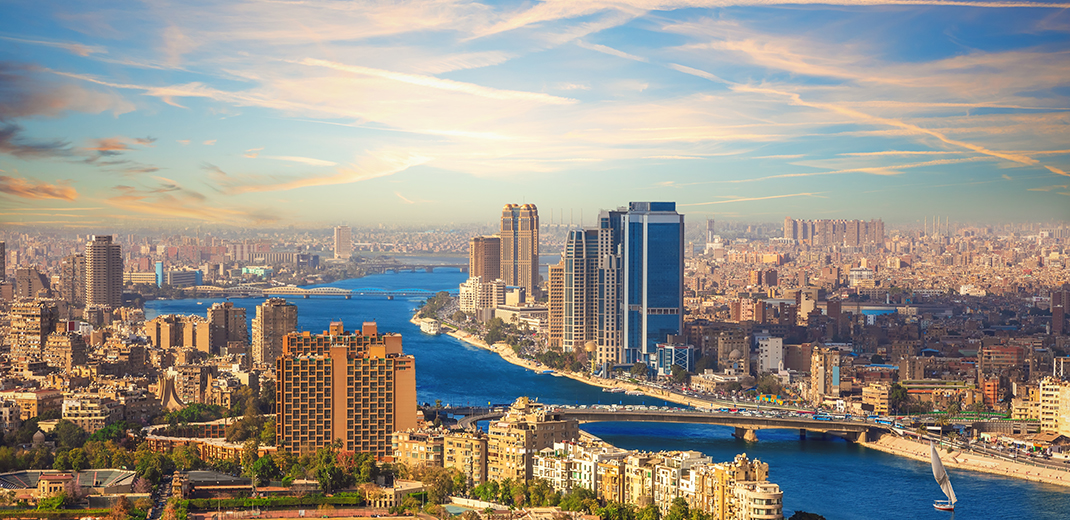
Egypt, the cradle of civilizations anchored by the eternal Nile, is currently a colossal workshop reshaping the future of the Middle East and North Africa. For decades, regional development focused on the shimmering towers of Dubai and Saudi Arabia’s giga-projects. Today, the spotlight is shifting toward a massive, state-orchestrated land rush unfolding from the Mediterranean coast to the deep desert. Egypt is making a competitive claim on the future—backed by staggering foreign capital and the sheer force of its abundant manpower.
Despite a past marked by infrastructural neglect, Egypt remains a geographically blessed nation at the nexus of Africa and West Asia. The current administration has prioritized the simultaneous development of real estate and tourism. A landmark of this era is the Grand Egyptian Museum, the world’s largest archaeological institution, which opened in 2025 after a decade of construction and more than $1 billion in investment. This focus has driven an intensive decade of infrastructure upgrades and urban redevelopment visible in Cairo, South Sinai, and the rapidly expanding North Coast.
This surge has upended the regional narrative. It is no longer a simple duel between Riyadh’s “NEOM” and “Expo City Dubai.” Instead, it is a three-way contest. While the UAE and Saudi Arabia build using petrodollars (oil-generated revenue), Egypt is building entirely new cities out of demographic necessity, actively attracting those very petrodollars to fund its survival and growth.
A distinct financial model: FDI and generational wealth
Egypt’s real estate engine—accounting for 15% to 20% of GDP—operates differently than its neighbors. Lacking the petrodollar cushion of the Gulf, Egypt relies heavily on foreign direct investment (FDI). Gulf states are shifting from providing aid to making strategic commercial investments to tap into a market of 110 million consumers.

Ahmed Elshanawany
Woven into the fabric of Egyptian society is a profound focus on homeownership as the primary vehicle for generational wealth. In the absence of a comprehensive national social security net, physical property is the nonnegotiable anchor of family security. This persistent domestic demand, often satisfied through pre-sales, provides developers with a unique level of financial stability and resilience against international market fluctuations.
The volume of capital is historic. Reports indicate $70 billion has been poured into the North Coast area over the past two decades, with $150 billion more expected. Last year, Egypt received its largest-ever single foreign investment: $35 billion from the Emirati fund ADQ for the development rights of the village of Ras El Hekma.
While some skeptics—lacking comprehensive data on the Egyptian market—suggest a real estate bubble is forming, recent market performance indicates otherwise. Following the stabilization of the dollar exchange rate, the results have proven contrary to these speculative concerns. Ahmed Elshanawany, an ACoM Leasing Executive based in Riyadh explains: “People think that there was a real estate bubble in Egypt in 2025, but many factors say not. For example, the bank interest is still more profitable than the rent return. This growth will apply the need for expert and certified entities and people to work and invest with.”
Cairo’s mega-decompression
Away from the coast, the New Administrative Capital (NAC), a community east of New Cairo, represents Egypt’s most consequential effort. Designed to move government and institutional life away from Cairo’s chaotic density, the NAC is a city of superlatives. It features the Iconic Tower (Africa’s tallest) and aims to host 6.5 million residents in its first phase.
The NAC is an economic multiplier. By relocating institutions, it unlocks valuable land in Old Cairo for redevelopment and creates hundreds of thousands of jobs. Alongside satellite cities like New Cairo and 6th of October City, NAC provides a long-term basis for managing demographic pressure that few other regional markets can match.
The call for professionalization and industry evolution
Egyptian real estate professionals have historically operated within a largely fragmented and decentralized system. Unlike other markets where a mandatory, centralized body governs agent licensing, the Egyptian market has traditionally relied heavily on large developer marketing houses for primary sales, where internal training often substituted for official state certification. While property transactions and ownership rights are strictly governed by the Egyptian Real Estate Registry, the professional conduct and licensing of individual brokers—especially those handling secondary-market resales—have traditionally lacked a single, stringent government body. Consequently, professional certification is not mandated by law but is pursued through private training academies and international bodies, leading to wide variations in professional expertise across the market.
The ongoing real estate boom, fueled by massive foreign investment and the sheer scale of the NAC and North Coast developments, is forcing a rapid, market-driven evolution toward professionalization that Egypt is embracing. This new era of sophisticated, high-value projects demands more than traditional salesmanship; it requires Egyptians to be versed in financial modeling, complex negotiation, and international standards. As a result, the industry is witnessing a clear and necessary shift.
This unprecedented physical expansion brings with it a fundamental shift in the regional labor market and operational standards. This massive development surge translates directly into a vast wave of new opportunities for property management and real estate professionals. The Egyptian real estate sector has been transforming from a traditional development-centric model to a sophisticated asset management ecosystem, reflecting the nation’s broader economic modernization.
As high-scale urban projects like the NAC and various “satellite” cities redefine the built environment, the role of property management has become central to sustaining long-term investment value. International firms and specialized local subsidiaries are increasingly adopting integrated facilities management (IFM) and proptech solutions to meet the expectations of institutional investors and multinational tenants. This professionalization ensures that Grade A assets maintain high occupancy rates and operational efficiency, mitigating the risks typically associated with large-scale emerging market developments.
Evolution of property management
The professionalization of property management acts as a critical catalyst for FDI. By shifting the focus from mere construction to life-cycle asset optimization, the industry provides the transparency and international standards that global capital requires. Despite macroeconomic challenges, the sector’s pivot toward sustainable, LEED-certified operations and tech-driven community management demonstrates a resilient maturity.
The transformation of the Egyptian real estate sector over the last 10 years marks a definitive departure from a fragmented, development-led past toward a future defined by institutional-grade asset management. This colossal transformation demands and is driving a crucial shift. While the industry historically relied on the momentum of primary sales and decentralized brokerage, the current era of mega-projects—symbolized by the NAC and the North Coast—has necessitated a more rigorous, market-driven professionalization.
The growth of the property management profession in Egypt reflects a two-pronged approach: the entry of global giants and the emergence of specialized Egyptian subsidiaries.
Market share:
- Egyptian entities: 75%–80% by volume
- International entities: 20%–25% by asset value
Growth rate: The professional facilities management/property management market has seen a compound annual growth rate of 8%–10% over the last five years.
Market value: Currently valued at several billion EGP; projected to double by 2030 as the NAC reaches full occupancy.
Shift in origin: Before 2016, “facility management” was often limited to security and cleaning. Today, more than 60% of new Egyptian firms offer integrated facility management (IFM), including energy management and digital proptech solutions.
Issue: Issue 2 2026 Volume 91 Number 2

Similar Posts
Global practices
Egypt’s growth blueprint
As foreign capital fuels growth, property management evolves alongside this...