Outlook 2026
Flexibility, continued AI adoption, and community building are top 2026 priorities for property managers

As 2025 comes to a close, we are firmly closer to 2030 than 2020—a reminder of how far the industry has come during the last five years and a chance to prepare for what’s ahead.
Property managers across all sectors continue to navigate disruption ranging from shifting economic conditions to evolving tenant preferences—disruption that has reshaped how people live, work, and build community.
Looking to 2026, property managers expect an even greater need for flexibility for evolving job demands, including amenity preferences, vacancy fluctuations, sustainability expectations, and the permanent role of AI.
Evolved demand

Ebony Landon, CPM®
Both commercial and residential real estate have adapted to changing tenant needs and market pressures. Flexibility will continue to be key for U.S. commercial properties as hybrid work remains a popular option. “That’s flexibility in leasing, in space, and in design,” says Ebony Landon, CPM®, senior vice president and director of operations at JBG SMITH. “It means recognizing that employees may not come into the office every day, but they still need daily access to the building.” In terms of space, a multipurpose model approach will continue to thrive, giving employees quiet places to work while offering companies conference areas to host larger meetings.
Lukasz Skowronski, CPM®, an IREM Instructor and CEO of Global Development LLP, says the trend for flexibility is also apparent in Kazakhstan. “Tenants want smaller but smarter offices with efficient layouts, high-quality fit-outs, and strong shared amenities, including conference rooms, meeting rooms, libraries, or collaboration zones,” he says. “In Kazakhstan’s major cities, we’re seeing a shift toward ‘intelligence per square meter’ rather than pure square meters. Occupancy in flexible office formats in Astana and Almaty has exceeded 90%, proving that agility is not just a passing preference but a structural change.”
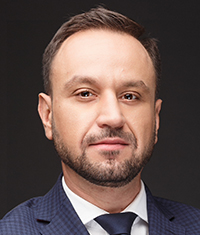
Lukasz Skowronski, CPM®
In terms of leasing, Skowronski predicts that flexible leasing options will continue to be popular, especially for younger or more international firms that need agility. He adds that AI-powered lease structures will soon reshape market perception, making flexibility a source of profit rather than risk for tenants and landlords.
Property managers predict that certain industries will remain steady drivers of office demand. Skowronski says the city of Almaty is Kazakhstan’s commercial and financial hub, and tenants there are making the move from outdated properties to occupy “modern, efficient, sustainable, and well-located” buildings. “In the city of Astana, demand is increasingly driven by government-related entities, international organizations, embassies, and large corporations establishing a stronger presence in the capital,” he says.
Based on the past year, he also expects modern buildings with strong ESG credentials and wellness features to achieve full or near full capacity, while outdated properties will struggle. “The winners are those assets that combine prime location with ESG certifications and lifestyle infrastructure,” he says. “Outdated stock is no longer just underperforming—it’s becoming unleaseable.”
He says the future of office space is not just “four walls. It’s a community, infrastructure, excellent service, a brand, and a reflection of values. Buildings that don’t adapt won’t just fall behind; they’ll disappear from the market.”
As for multifamily, property managers are optimistic about healthy demand in 2026.

Nicole Loser, CPM®
“Gen Z is entering the market in greater numbers, and affordability pressures and mortgage rates are still driving apartment demand,” says Nicole Loser, CPM®, divisional vice president for Berger Communities. New construction has increased supply in some markets, pushing up concessions and slowing rent growth, but Loser anticipates this to change in the new year. “We expect a slowdown in new construction starts and lease-up inventory in 2026, which will allow us to reduce concessions in these pockets, so we are very optimistic for healthy occupancy and normalized rent growth,” she says. Alongside these market shifts, Loser says her company is also working to increase occupancy by offering lease flexibilities because they believe and have even registered a trademark on the commitment “renting shouldn’t be hard®.”

Oscar Rodriguez-Aguila, CPM®
Oscar Rodriguez-Aguila, CPM®, reports seeing a solid low vacancy rate in Southern California’s residential market. “But we need to be prepared for the impact of the current circumstances, such as ICE’s involvement in the area,” he says, noting the diversity of the region. “This could influence the vacancy rates we may be facing moving into 2026. With a lack of reasonably priced affordable housing, it’s going to be a challenge.”
Solidifying AI’s role
If 2025 had to be defined by one transformative technology, it would be AI. During the past year, property managers have tested and piloted various tools, and, in 2026, they plan to continue using these platforms to streamline client communications, handle routine tasks, and enhance work.
In 2025, Loser’s team implemented several AI resources. These included a chatbot for automated customer responses and platforms that support office teams by drafting messages and email responses. Rolling out Microsoft Copilot also created efficiencies in analyzing reports, identifying trends, and connecting Microsoft products such as OneNote, Outlook, Teams, and Calendars.
“Looking ahead, we have partnered with a third-party consulting group to evaluate our non-property technology, further develop our AI strategy and policies, and investigate ways to continue harnessing and unlocking the power of AI to improve efficiencies and automation, allowing our teams to focus on taking care of their residents and each other,” Loser says.
For Landon, her company will continue to take a slow, strategic approach to adopting AI. “We’re keeping it simple,” she explains. “On the residential side, we’re using EliseAI’s EliseCollect, and Yardi Suite for automating our screening. We’re using AI to fill the gaps for tasks that people don’t have time for, such as meeting notes, but it’s not going to replace people.”
Skowronski says his team is fully aware of the growing role of AI in each industry, including real estate, and they are following trends closely. “What strikes me is that even the brightest minds in technology are divided,” he says. “Concerns about AI include that it might surpass humans completely; that it is a fundamental risk to civilization; that it may be a misaligned superintelligence; and that it could wipe out millions of both entry-level and mid-level engineering jobs.
“For us in real estate, the message is clear: AI will transform our industry, too. It will automate tasks, optimize operations, and support decision-making—but it also challenges us to think carefully about ethics, responsibility, and the human side of property and asset management. In the end, buildings are for people, and technology must serve that purpose, not the other way around.”
Focusing on sustainability and prevention
Tenant expectations and savings in cost and energy will continue to make sustainability a priority in the coming year.
Skowronski says that sustainability has gone from a “nice-to-have” to a deciding factor for many corporate tenants, particularly international firms, and that certifications like LEED and BREEAM have become valuable credentials.
“We do see tenants willing to pay a modest premium for certified spaces because they understand the long-term value of these initiatives,” he says. To maintain their approach to sustainability, his firm focuses on three pillars:
- Operational efficiency through energy-saving HVAC systems, LED lighting, and water-saving fixtures
- Data-driven management utilizing smart metering and building management systems to track consumption and optimize performance
- Tenant engagement measures, such as awareness programs and green lease clauses, aligning owners and tenants
In practice, certified buildings show 10%–15% higher tenant retention and stronger rent growth, says Skowronski. “With ESG now a key factor in office selection, our assets stand out as both regional and global leaders,” he says.
Landon’s approach to sustainability focuses on operational discipline, including training teams to diligently monitor systems and using sensors that have been tried and true for years. “We’re all about being the best at the basics,” she says. “We’re operating better buildings that use less, waste less, and deliver more. Core system performance—HVAC optimization, lighting control, and energy monitoring—is where you get true ROI. A lot of other things you’ll never be able to prove because by the time you invest, something better comes along, and you have to spend more.”
Preparing for disasters
Natural disasters continue to be a concern, and property managers will enter 2026 considering the special conditions of their regions. Being in Southern California, Rodriguez-Aguila’s team is prepared to deal with droughts. “We’re tracking water use in our water heaters with a device that detects abnormal water use, indicating a leak,” he says.
Education will play a crucial role in preparing for future crises, and Rodriguez-Aguila says he is committed to learning as much as possible to protect his buildings. “After the winds and fires we experienced in January, I gained new insight into how fires behave,” he says. “I’ve learned to look not only at natural factors that affect a fire, like wind, but also at how construction elements, such as insulation, ventilation, and other building features, can either protect a property or make it more vulnerable. Even mulch, which
I never thought of as a risk, can act like gasoline for a fire. I’m thinking differently now because these aggressive natural events are creating new challenges.”
Prioritizing engagement and community
Post-pandemic preferences and lifestyle changes will continue to keep property managers on their toes as they adapt to evolving tenant and resident needs.
“It’s been called a flight to amenities, but it’s really becoming a flight to quality, dependability, and loyalty,” Landon says. “The demand is not driven by novelty anymore. It’s driven by intentionality.”
To foster stronger loyalty and ensure dependability, Landon says brand messaging and alignment will be increasingly important. “We’re prioritizing consistency in our properties, so if a resident wants to move to another market, we can refer them to a like-sized building with the same amenities and structure that they’re accustomed to,” she explains. “We want people to be able to use our buildings seamlessly—access control, payments, service requests—and we want consistency in the quality of our service.”
She encourages property management leaders to take the time to define their company’s mission and the standard they want to set.
Along with connecting with a property’s brand, residents and tenants are also craving connection with one another. “Community building is especially important in hybrid work times—tenants expect us to provide networking opportunities, cultural events, and shared spaces that help them attract and retain talent,” says Skowronski. “And ESG has become part of the corporate DNA of many tenants, and they expect their offices to reflect those values.”
Loser says this sense of community is just as important for multifamily residents, and the newest properties are designed with amenity spaces that encourage gathering and interaction. These new amenities are central to new projects and are being added to existing communities, she adds. Some of the popular new features include:
- Grill terraces
- Fireside lounges
- Bark parks
- Rooftop terraces
Recognizing that tenant preferences evolve rapidly, Loser’s company conducts resident surveys and focus groups to gather direct feedback on which amenities are most valued and what residents would like to see in the future.
Expanding mixed-use
Looking ahead to 2026, mixed-use will continue to be highly sought-after for both commercial and residential tenants. Skowronski points to the Talan Towers ecosystem in Astana as a successful example of this trend. “Premium office space integrated with a 5-star hotel, ballroom, conference amenities, top dining options, and retail gallery—tenants value the convenience and prestige,” he says. “With professional property management, facility services, and dedicated tenant events, it creates an experience that goes beyond the office. This model shows that even in emerging markets, mixed-use projects can offer the same convenience and prestige as those in London, Dubai, or Singapore. We’re not just managing offices—we’re creating places where work, lifestyle, and community come together to multiply tenant value.”
As 2026 approaches, Landon predicts that property managers will need to focus on curating the right mix of retail and residential amenities to drive engagement. “It’s not just about what’s new or popular—it’s about how retail fits into the overall community and life cycle of a property,” she says. “We see this becoming increasingly important as tenants and residents look for more integrated experiences.”
Set for success
In the coming year, Landon says it will be imperative for property managers and owners to have clear priorities specifically around capital investment and planning, streamlining operations and functional technology, particularly with a simplified tech stack.
Rodriguez-Aguila emphasizes that education and continual improvement are essential. “No matter how seasoned a property manager is, the reality is that the job is no longer collecting rents and paying bills,” he says. “We need to be more prepared than ever to make the best decisions and protect the best interest of the assets we manage.”
One approach to this is focusing on doing fewer things exceptionally well, Landon says. “Focusing on this and consistently delivering on it is what builds loyalty,” she says. “And it’ll build loyalty into 2026 and beyond.”

Similar Posts

Features
Preventing crime in multifamily housing
Proven strategies to reduce risk, improve security, and protect residents