

Hubs of discovery
Property managers embrace unique operational and regulatory demands of life sciences sector
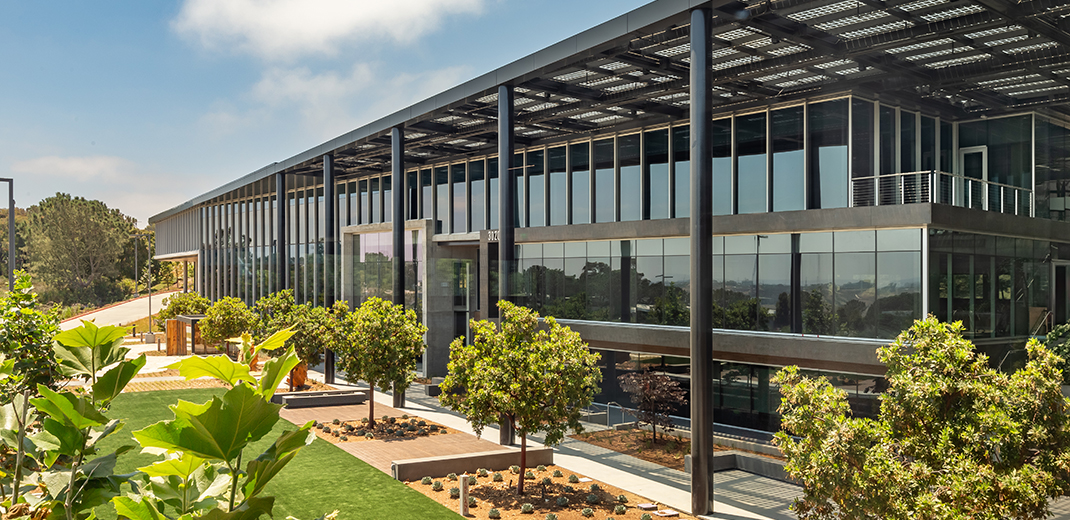
What do rapid vaccine development, the testing and storage of controlled substances, and safety assessments for Botox and dermal fillers have in common? They all take place within a life sciences facility.
The life sciences market, encompassing pharmaceuticals, biotechnology, diagnostics, and other related industries, is projected to surge at a compound annual growth rate (CAGR) of 10.28% from 2024 to 2033. The pharmaceutical industry alone is projected to grow to $2.8 trillion by 2033, up from $1.6 trillion in 2023.
This growth—coupled with the sector’s unique mix of tenants and property needs—presents a wide range of challenges and opportunities for property managers overseeing life sciences facilities.

Robert Fuller, CPM®
“It’s a very complex, dynamic market—there’s nothing static about it,” says Robert Fuller, CPM®, who has experience overseeing life science facilities in New Jersey.
Centers of innovation
In the U.S., the right mix of research institutions, universities, and life sciences companies fuels the major hubs for this market, including Boston, San Diego, San Francisco, and North Carolina’s “Research Triangle” of Raleigh, Durham, and Chapel Hill.
Life sciences and pharmaceutical companies flourish in these areas, whether they are larger companies, such as Illumina or Johnson & Johnson, which often own their facilities, or smaller companies that rent space in a shared building. Start-ups can take advantage of life sciences incubators, which offer supportive staff, necessary equipment, mentorship, and even seed funding.

Sean Harvey
Sean Harvey is the San Diego-based assistant vice president and regional property manager for Healthpeak Properties, which manages approximately 700 life sciences, medical research, outpatient medical, and continuing care retirement community properties nationwide.
“Healthpeak has more than 30 buildings in San Diego with a mix of tenants—some in biotechnology focusing on oncology, neurodegenerative disease, regenerative medicine, or drug development,” Harvey says. “We have tenants in medical diagnostics, medical device manufacturing, and several research firms working on crop and agricultural sciences. With the University of California San Diego right here, it’s a mutually beneficial environment, as students with life sciences degrees are a great source to fill any demand.”
Each facility is tailored to meet tenant needs, featuring administrative space, research and development labs, and production or manufacturing space known as “cleanrooms,” which are specially controlled environments, Fuller explains.
“While there is a clear delineation between cleanrooms and administrative areas, there’s a true synergy,” Fuller says. “These buildings are a beehive of activity.”
Unique specifications
Along with the property management considerations of other office buildings, life science properties require a deep understanding of technical systems and industry-specific protocols.
Special considerations include:
- HVAC, air pressure, and humidity control. These facilities require 100% outside air intake and maintain strict temperature and humidity requirements, especially in laboratory environments. Along with a traditional building management system (BMS), these facilities have proprietary BMS that monitor the cleanrooms for their exact specifications.
- Emergency power. Backup generators and batteries must be able to handle the full load of the building, including its numerous refrigerators, incubators, and other critical equipment.
- Deionized water, compressed air, and vacuum systems. These are standard requirements in the laboratory environment.
- Sanitation systems. These maintain sterile conditions.
- Laboratory and cleanroom equipment and protocols. “It’s essential that we know what every room is used for, and the rules for each room, such as if we have to gown up fully or partially,” Fuller says. He recalls one building he managed had an “explosion” room, where chemicals were mixed, so staff had to pay close attention to when the room was in use.
- Staff qualifications and background checks. “One building had the Drug Enforcement Administration (DEA) as a tenant, and confiscated drugs were tested and held as evidence in the building,” Fuller says. “It was highly secured, so our staff had to undergo background checks.”
- Regulatory compliance requirements. It’s essential to comply with various government agencies, such as the Food and Drug Administration (FDA). “Regulatory compliance is constantly evolving, and we have to be compliant with all state, county, city, and federal requirements,” Harvey says. “There’s a lot to keep up with, and the checklist for inspections has grown.”
Fuller says that life science pharmaceutical facilities are frequently audited by both government agencies and third-party auditing firms. “The audits involve in-depth reviews on a frequent basis (annually, bi-annually, etc.) of the facility’s cleanliness, processes, procedures, and recordkeeping areas of operation. Also, in-house audits are performed by the owners of pharmaceutical facilities, allowing the companies to prepare for upcoming audits, address audit findings, remain compliant, and improve operations.”
Ensuring the smooth and safe operations of a life sciences facility begins with client communication and collaboration.

Kris Kopensky, CPM®
“We check in with our tenants several times a year to review regulatory compliance and partner with them when needed,” says Kris Kopensky, CPM®, vice president of operations at BioMed Realty. “When a tenant leaves a space, we support their efforts to obtain decommissioning reports when required.”
To understand lab requirements and help clients stay compliant, Harvey recommends that property managers in this sector stay familiar with resources from the International Society for Pharmaceutical Engineering and the International Institute for Sustainable Laboratories.
Preventive maintenance
Given the importance of the work conducted in life science facilities, preventing damage and staying on top of maintenance is essential.
“We have a comprehensive proactive maintenance program that covers every aspect of our facilities,” Harvey says. “Early, proactive alerts are helpful. If something goes out of spec, we’re on it right away. There’s no time to waste.”
Fuller notes that artificial intelligence (AI) has introduced new capabilities in predictive maintenance. “When you’re managing lab space, proactive maintenance goes above and beyond,” Fuller says. “With AI, you can focus more on predictive maintenance, capturing trends over years, looking at the number and types of repairs that were made on specific equipment, and their associated cost, so you can plan or maintain them accordingly.”
He adds that they also have found value in computerized maintenance management systems (CMMS), which are used in life science facilities and other facilities with complex manufacturing equipment. These systems plan, track, and analyze maintenance activities to improve efficiency and minimize downtime.
Kopensky says BioMed Realty has a disaster management software solution and an integrated work order platform that consolidates operations and key performance data into one centralized system. “We look five to 10 years ahead on critical building systems to ensure that all preventative maintenance is done,” he says. “This provides for consistent and reliable service of these systems for our tenants.”
Emergency preparedness
Fuller says life sciences property managers must be ready to address any type of unexpected event. “We have an active evacuation team for any type of emergency—earthquake, tornado, hurricane, fire, or cybersecurity incident—and we have drills throughout the year,” he says. “We have the proper insurance and a business continuity plan in place so if a catastrophic event occurs, the business can continue.”
In his experience, Harvey has had to run generators and battery backups when unexpected power problems have occurred. “We’ve also had our access to city water disrupted when nearby construction accidentally cut into plumbing,” he says. “So we had to find ways to get water and to keep operations running.”
He adds that the job requires managers to think on their feet—”testing, monitoring, maintenance, fire and life safety checks, hazmat training for staff—and constant communication. Collaboration between us and the tenant is so important, and we must understand their protocols and emergency plans. Even if we don’t manage that equipment, we have a responsibility to the property and the surrounding area and must have an outline of all critical functions of the property.”
Above-and-beyond amenities
Employees of life sciences facilities are seeking the same amenities as those in other office buildings—and the facilities deliver. Along with the typical amenities, such as cafeterias, these buildings offer plenty of ways for workers to de-stress, practice self-care and wellness, and have some fun.
“Showing that the well-being of employees is a priority goes a long way with retaining employees,” says Fuller, who adds that game rooms, meditation rooms, and libraries are popular.
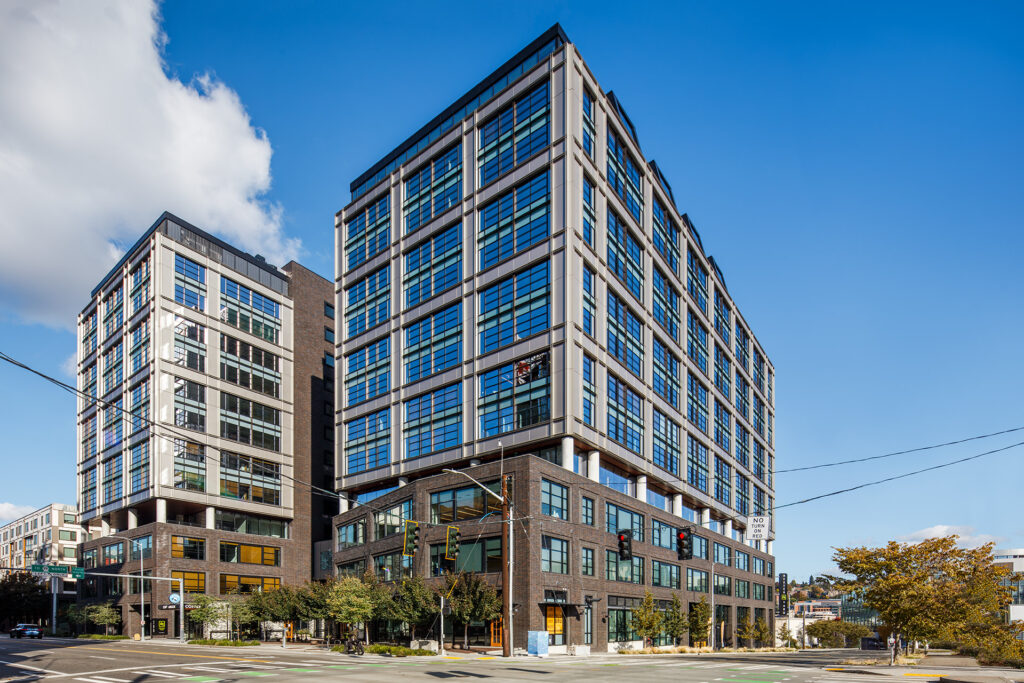
Dexter Yard in Seattle
BioMed Realty’s Dexter Yard in Seattle goes above and beyond with high-end amenities, offering the SLU BRU beer hall, rooftop deck, speakeasy, bowling alley, card room, darts, and a golf simulator. “In Canal District Kendall in Cambridge, Massachusetts, BioMed Realty has hosted seasonal events and activities, like outdoor concerts, dining, a canoe and kayak launch, public art, a farmers market, a winter artists’ market, and a community ice skating rink, bringing life to the community even outside of working hours,” Kopensky says.
Harvey says they prioritize gathering tenant feedback to gauge interest and satisfaction in amenities and events. They are working on rolling out a “one-stop, one-touch” app to engage with employees and make them aware of the various offerings.
“We focus on creating environments where employees can fully concentrate on their work and then relax during breaks,” Harvey says, adding that they try to take advantage of their Southern California natural environment with outdoor activities and meeting spaces. “We also raise bees on campus and host events to educate people about ecology and bee science, sharing products such as honey produced by the bees.”
Thriving in life sciences
For property managers looking to transition into the life sciences market, Fuller recommends obtaining certification in Good Manufacturing Practices (GMP), which is a requirement for many of these roles.
“Constant education to stay abreast of changes and innovations is a must for successfully managing a life sciences facility,” Fuller says. “Use your people, marketing, financial, or engineering skills—these are all transferable to the life sciences sector.”
To truly succeed, Fuller suggests managers surround themselves with others in the field, take advantage of their company’s training platforms, attend conferences, take courses, and read the numerous books devoted to managing pharmaceutical spaces.
Harvey agrees that ongoing learning is key to succeeding in this flourishing sector.
“These are such specialized buildings, and the demand for knowledgeable managers will only grow,” he says. “These facilities are the physical backbone of the global effort to discover, develop, and then deliver new things. And you’ll always need a place to do that.”

Similar Posts
Property spotlight
The self-storage solution
Ease of operations and consistent demand make the self-storage market...
Property spotlight
Where office meets healthcare
From infrastructure demands to regulatory compliance and tenant expectations, medical...

Property spotlight
Multifamily’s next moves
Residential property managers focus on service, smarter tech, and popular...