Prepping for disaster
Learning from the past, property managers share tips for being ready when the unexpected happens
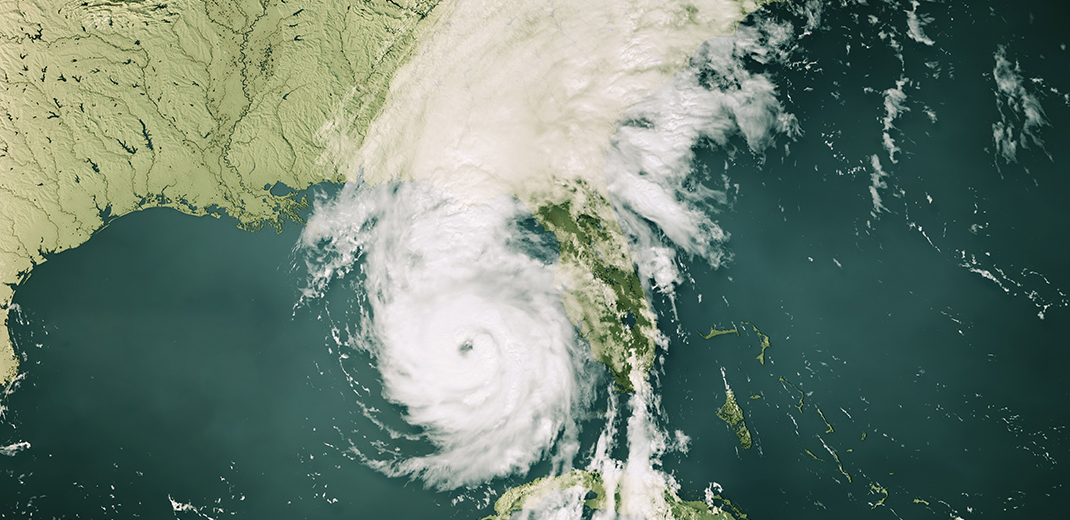
There was certainly no shortage of natural disasters in 2024. According to the National Oceanic and Atmospheric Administration (NOAA), there were 27 separate weather and climate disasters in the U.S., costing $182.7 billion and causing 568 deaths. This made 2024 the fourth costliest year on record, with the eighth-highest death toll since 1980. The increase in frequency of these natural disasters is caused by population growth, development, and climate change.
While natural disasters may be the first thing that comes to mind when thinking about disaster emergency preparedness, other areas of concern include violence, property loss, everyday emergencies, and unprecedented situations.
As the risks grow, it is more important than ever for property managers to make sure they have updated, effective, and realistic disaster emergency plans. JPM talked with Jesse Holland, CPM®; Jeffrey Lapin, CPM®, ARM®; and K. David Meit, CPM®, ARM®, about their disaster experiences in property management.
Disaster types and risk assessment
Different properties will have different risks depending on building type, tenant demographics, geographic location, and adjacent elements such as an interstate highway next to the building.

Jeffrey Lapin, CPM®, ARM®
Lapin points out that while fire and flood risks are standard everywhere, property managers must prepare for emergencies specific to their location, such as earthquakes in Southern California, windstorms in West Texas, and hurricanes and tropical storms in South Florida. “Every property is like a snowflake,” Lapin says. “Each one is unique. Even two buildings built to the same set of drawings across the street from each other, in five years, will be substantially different because of the way they’re operated, the way they’re leased out, the usage, the equipment, etc. So we have to start with the assumption that every property is distinct, and we need to customize the plan to address the most likely emergencies to occur at that particular property.”
Lapin suggests property managers assess the risks with their teams based on their specific property situations. “Think through those things that are most likely to happen, and come up with responses for each one.” Holland also suggests: “Look at what systems could fail and create a disaster. A pump station with no electricity can become a disaster in a hurry, but adding a generator or the ability to connect one could prevent that.”
Through his experience as an expert witness, Meit knows that property managers may not be prepared to deal with emergencies of violence. He stresses that it is vital to know the crime history of a property’s area, including whether the physical asset you’re managing could be a target. “We deal with that in Washington, D.C., all the time because D.C. in itself is a terrorist target. And of course, we’ve lived through it all with 9/11 when the Pentagon was hit. I have close colleagues of mine who were in New York during 9/11. They have powerful stories of how they worked with their tenants and brought people to safety.” Property managers should be aware of these risks and know their emergency systems, work with local law enforcement and tenants, and formulate a plan for these specific types of emergencies.

K. David Meit, CPM®, ARM®
Meit also explained how property loss is the main emergency dealt with in property management. This can be from fires, floods, earthquakes, or storms, but also related to mold outbreaks and indoor air quality. Knowledge of your property type and what construction issues it may present is the key to handling these situations. “An outbreak of mold or unhealthy indoor air quality could be caused by a problematic HVAC system, or it could be water infiltration from poor construction or lack of preventative maintenance,” Meit says.
High-impact/low-volume events

Jesse Holland, CPM®
Certain disaster situations may not be front of mind, and Holland thinks it’s important to “understand what’s high impact, low volume and what is high volume, low impact. So while things like [natural disasters] are exciting to talk about, you’re so much more likely to have someone collapse from a heart attack in front of you.”
Holland recalls a unique situation that his property management team had to handle on the spot. A rabid fox had entered the property and attacked a tenant and a dog, and another tenant ended up killing the fox. The dog was OK, and the tenant had to get rabies shots. He thought this was the end of the story, but the next day, the local news showed up with questions. Holland and his team had to develop responses that would protect the property from a public relations standpoint. He emphasizes the importance of knowing your property to plan for hard-to-predict incidents. “This had nothing to do with us. We don’t keep foxes. But [the property] was next to wetlands, and foxes get sick.”
Holland also thinks it is wise to pay attention to current events, because this helped his property management team be more prepared when COVID emerged in China. While most people in the United States did not see this as a serious threat at that time, Holland followed it closely and, with his team, came up with a plan on how they would tackle the situation if or when it affected the U.S.
Creating a plan
The key components to prioritize when creating a disaster preparedness plan for your property include knowing your property and your resources. “Make sure you are aware of your life safety systems, alarms, sprinklers, and halon, carbon monoxide, and smoke detectors. Know how your building is set up, including if the elevators shut down or if you have fire doors or an emergency generator,” Meit says. The property manager must know the evacuation routes and where building occupants can safely gather to await further instructions.
If no evacuation routes are available, study your building and determine the easiest ways to egress. Then, become familiar with the available outside resources. This can include the Red Cross, your local Federal Emergency Management Agency (FEMA) resources, first responders, online platforms, and even other property managers.
Lapin adds that each property or building should have an adequate supply of emergency water, food, first-aid supplies, sanitary supplies, and rescue tools. He says an area-wide emergency often requires building occupants to be self-sufficient for up to 72 hours. Disaster recovery plans should account for this possibility.
Relations with first responders
Communication and relationships with local resources are vital to a successful disaster preparedness plan. “A disaster will most likely affect multiple properties, if not multiple areas at a time,” Lapin explains. “So our firefighters, police, and EMTs want to be involved. It’s been my experience that they love to come and talk about what they’re going to be doing or what they aren’t going to be able to do for us immediately after a disaster. We can then incorporate this into our plan.”
Meit has some excellent advice for how to build these relationships with local first responders. “Cookies. When I take over a property or we build a property, we visit the firehouse with cookies or something else yummy,” he says. “You’re building stakeholder relationships.” Property managers want to make sure they know their local emergency responders and that the emergency responders know them. “During Fire Prevention Week, we invite the firefighters, and they bring the truck. They love doing that. The firefighters don’t love fighting fires; they love being prepared and teaching you how to prevent fires.”
Holland adds: “Engaging with [first responders] makes their job easier and helps build relationships. Don’t forget to show them your appreciation, especially volunteer companies. Members are leaving their jobs or families to respond to calls at your property. Hosting a drill night, sending food, or even just a nice card goes a long way.”
In addition to building relationships with first responders and other local emergency service personnel, it can also be extremely beneficial to build relationships with other local property managers. Holland points out that fellow property managers can lean on each other. When one has a disaster and needs extra rooms, staff, or resources, they can ask the other.
Connecting with other property managers
Holland received some helpful advice from fellow property managers who dealt with the aftermath of Hurricane Irene in 2011. “’Order dumpsters now, because you’re going to need them when there’s no power and everyone has to throw out all their food’. That piece of advice made all the difference in the world,” he recalls. Also, continue to keep up your IREM member connections. “IREM is a tremendous resource because we have so many experienced property managers, property management supervisors, company owners, etc.,“ Lapin explains.
“Draft the plan, distribute the plan, and work the plan,” says Meit. Do regular emergency drills at your property so your tenants and staff feel well-prepared in case of an emergency. And be flexible about adjusting the plan when the situation changes or you find that an important step or procedure has been omitted or can be done better, Lapin advises.

Jaymi Lacap, CPM®
By Jan. 7, 2025, the region had gone eight months without measurable rainfall. That day’s forecast warned of sustained winds at 60 m.p.h., with gusts reaching 100 m.p.h.—a perfect storm for disaster.
Jaymi Lacap, CPM®, general manager with CBRE and president of IREM’s L.A. Chapter, was at work in Century Plaza Towers, the 2.4 million square foot Class-A commercial property she manages in Century City. That morning, the Pacific Palisades fire ignited just 12 miles west.
As the fire grew, colleagues living nearby began leaving to check on their homes. Lacap headed out around 6 p.m., planning to drive 45 miles east to Altadena to celebrate her birthday with her family. But she never made it home. While en route, the Eaton Canyon fire broke out. By the time she reached Pasadena—just 10 miles from her house—roads were closed.
The Eaton Fire destroyed more than 7,000 structures, including most of the homes near Lacap’s neighborhood. Remarkably, her home was one of only about 60 spared, thanks to its unique location in the canyon. Still, extensive smoke damage meant she and her family couldn’t return until major remediation was completed.
“It was a few weeks before I could get back to our street,” Lacap says. “The first time was at night, and everything was just dark. But when I returned during the day, driving up Altadena Drive, I remember thinking, ‘Something’s missing.’ The entire neighborhood was gone. A lot of us feel survivor’s guilt—why were we spared when others just half a mile away lost everything?”
While she didn’t manage any properties affected by the fires, Lacap’s ownership group organized relief duffel bags filled with toiletries, gift cards, and essentials for those who had lost everything. LaCap also applied for and received assistance from the REALTORS® Relief Foundation (RRF), a grant program available to IREM members through the National Association of REALTORS®.
“The grace in all this is that, because I’m in property management, I could work directly with trusted industry partners for remediation,” she says. “The support we received was overwhelming. Our community brought us pillows, blankets, toiletries—even suitcases. Vendors I’ve worked with over the years offered their homes, helped with insurance paperwork, and connected us to remediation and testing companies.”
Though her home remains uninhabitable for now, Lacap’s sense of gratitude is strong. “I feel incredibly lucky to be part of this industry,” she says. “In the face of devastation, it was this community that helped us feel whole again.”

Similar Posts

Features
Preventing crime in multifamily housing
Proven strategies to reduce risk, improve security, and protect residents