

The self-storage solution
Ease of operations and consistent demand make the self-storage market one of commercial real estate’s most resilient
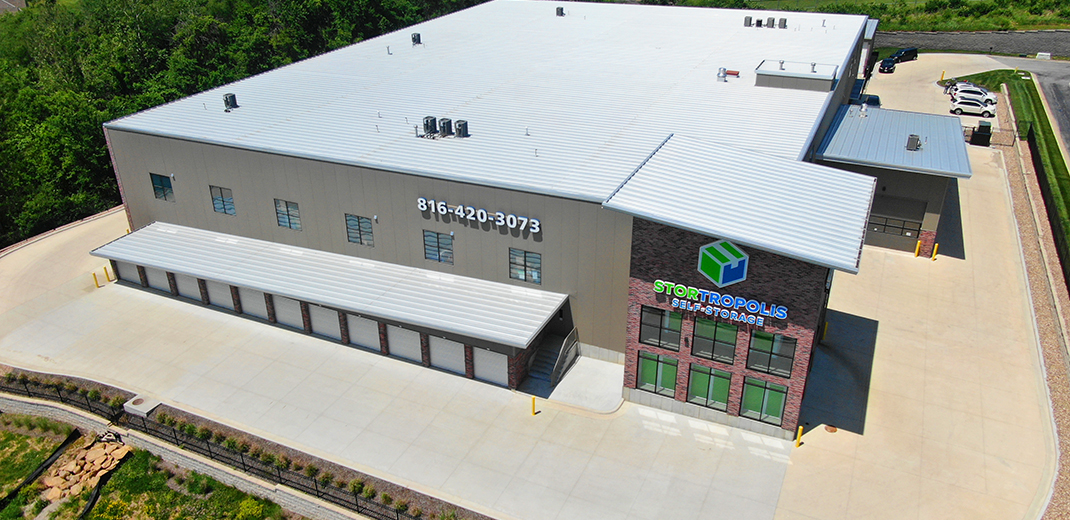
While commercial real estate has experienced significant ups and downs since 2020, self-storage has proven to be one of the industry’s more resilient sectors. According to the Self-Storage Association, more than 50,000 self-storage facilities now operate across the United States, and demand remains steady. What began as pandemic-era growth fueled by relocation, downsizing, and lifestyle changes has evolved into a more stable long-term storage solution driven by affordability challenges, flexible living arrangements, and consumers’ ongoing need for space.

Pascal Souvenir
Pascal Souvenir, senior vice president and head of self-storage at Heitman, says the sector is no longer relying solely on traditional moving activity to drive demand.
“What we are very much seeing happen in real time is demand from other sources,” Souvenir says. “Customers who would have used self-storage for three months for staging and moving are using self-storage as a lifestyle choice. They’re using it for a longer period of time and ultimately becoming more valuable customers because they’re staying with us longer.”
As the housing market has cooled and home sales remain below pandemic-era highs, many consumers are increasingly using self-storage as a flexible solution while delaying home purchases or transitions. Souvenir notes that longer stays seem to be most common with renters leasing medium- and large-sized units.
This unique demand has also helped offset slower move-in activity tied to reduced home sales. Souvenir says that move-ins across Heitman’s portfolio have declined modestly over the past two years. “But because customers have been staying longer, churn has been reduced,” Souvenir says. “It can actually support your income stream and rent roll over a longer period of time.”
Other demand drivers
A broad range of uses—and the renters themselves—are among the reasons many operators view the sector as particularly resilient. Demand can stem from a wide range of life events, from relocations and downsizing to estate planning and business storage.

Bret Richardson
With the disclaimer that it can seem grim, Bret Richardson, director of asset management at Hunt Midwest, says there is an industry saying that self-storage relies on the “four Ds”: “divorce, displacement, disaster and death.”
At Hunt Midwest, which operates more than one million square feet of Class A self-storage and RV/boat facilities in the Kansas City market, Richardson says the industry still experiences strong seasonal leasing cycles, especially during the summer months.
“Right now, it is leasing season,” Richardson says. “As we go into summer, you have a lot of students moving. Typically, you have more people either downsizing or buying a new house.”
While summer leasing activity remains heavily tied to seasonal moving, operators are also seeing strong demand from small businesses, contractors, and recreational vehicle owners who use the space to store inventory or equipment.
“For example, you may have 10% of tenants who own a business that they’re storing material and/or work vehicles in their storage unit,” Richardson says.
Unique asset
Operationally, self-storage differs dramatically from more traditional commercial property types like multifamily, office, or retail. One of the biggest distinctions is the lean staffing model.
Richardson says. “As far as staffing goes, you have one to two people—manager and assistant manager—on site, and that’s about it. Typically, your largest expense is property taxes, which we’ve seen significant increases in since we got into this commercial real estate sector.”
Souvenir says that simplicity contributes to self-storage’s reputation as a high-margin asset class.
“Self-storage is one of the highest-margin operating sectors that there is,” he says. “You don’t have teams of maintenance, management, and leasing.”
Richardson cautions that while payroll accounts for only a small portion of facility expenses, cutting corners on staffing is a major mistake. He urges companies to compensate their property managers competitively to secure the best talent.
“Your district manager who oversees your portfolio directly, that’s probably the most important person,” Richardson notes. “Pay your managers, pay your people… property taxes are hands down the largest expense you’ll have. So to pay a couple more dollars an hour to get a solid manager… you’ll see the difference versus one who’s [not] engaged.”
Turnover between tenants is also significantly faster and less capital-intensive than in other property sectors.
“For self-storage, you need a broom and a mop, not a construction crew,” Souvenir says. “Literally 30 minutes or by the end of the day, that unit is ready to be relet.”
Another distinctive quality of self-storage is the month-to-month lease.
“We generally see that lease type provides us with inflation protection,” Souvenir says. “During inflationary periods, we have been able to mark to market and grow that rent roll quickly.”
Digital shift
Technology is also reshaping the sector and directly influencing the manager’s day-to-day role. Online leasing, automated gate access, dynamic pricing systems, and digital customer management tools are increasingly considered standard operating requirements.
“Online leasing continues to be the main driver for leasing,” Richardson says. “We’re seeing that more and more people are shifting to online leasing, as opposed to coming in or calling.”
Enhanced security has also become a priority, especially as customers store increasingly valuable belongings. At Hunt Midwest properties, Richardson says tenants can even subscribe to in-unit monitoring systems that alert them directly if motion is detected inside their storage unit.
Adds Souvenir: “Security gate, Bluetooth access, video cameras, cylinder locks or padlocks, elevator access codes, door access codes—all of that is very important.”
With the digital upgrades, operators are careful to balance that technology with customer service. While many tenants prefer fully digital leasing experiences, others still want face-to-face interaction and reassurance.
“You have to meet the customer where they are,” Souvenir says. “There are still plenty of folks who want to go into the leasing office and talk to the manager face to face, and there are a lot of people who are totally fine doing everything on their phone.”
Looking forward
For investors and property managers considering entering the sector, both experts emphasize discipline and patience. Richardson warns that some markets are oversupplied after the rapid development wave of the past several years, while development timelines have stretched significantly.
“In certain markets, there is a lot of oversupply,” he says. “It used to be a three-year lease-up during COVID, but now it’s about five. So if you’re looking to develop, check the market pipeline and proforma for a longer lease-up.”
To make development and lease-up as smooth as possible, Souvenir says that anyone entering the sector should prioritize seasoned partners and set realistic expectations.
“Partnering with an experienced operator, advisor, or partner is paramount,” he says.
Despite these current challenges, both asset managers remain optimistic about self-storage’s long-term outlook. With new construction slowing down, a steady mix of customer needs, and straightforward day-to-day operations, the sector will continue to demonstrate why it is one of the most resilient.
Issue: Issue 3 2026 Volume 91 Number 3

Similar Posts

Property spotlight
The new reality of condominium management
Focusing on governance, finance, and communication

Property spotlight
The self-storage solution
Ease of operations and consistent demand make the self-storage market...

Property spotlight
Where office meets healthcare
From infrastructure demands to regulatory compliance and tenant expectations, medical...